MMO life sim Seed's AI-powered avatars prove once again that nothing shatters immersion quicker than crappy chatbot dialogue
Klang Games CEO Mundi Vondi reveals that powering persistent avatar dialogue with generative AI in MMO sim Seed created 'a thousand little breakages' in game logic and player immersion.
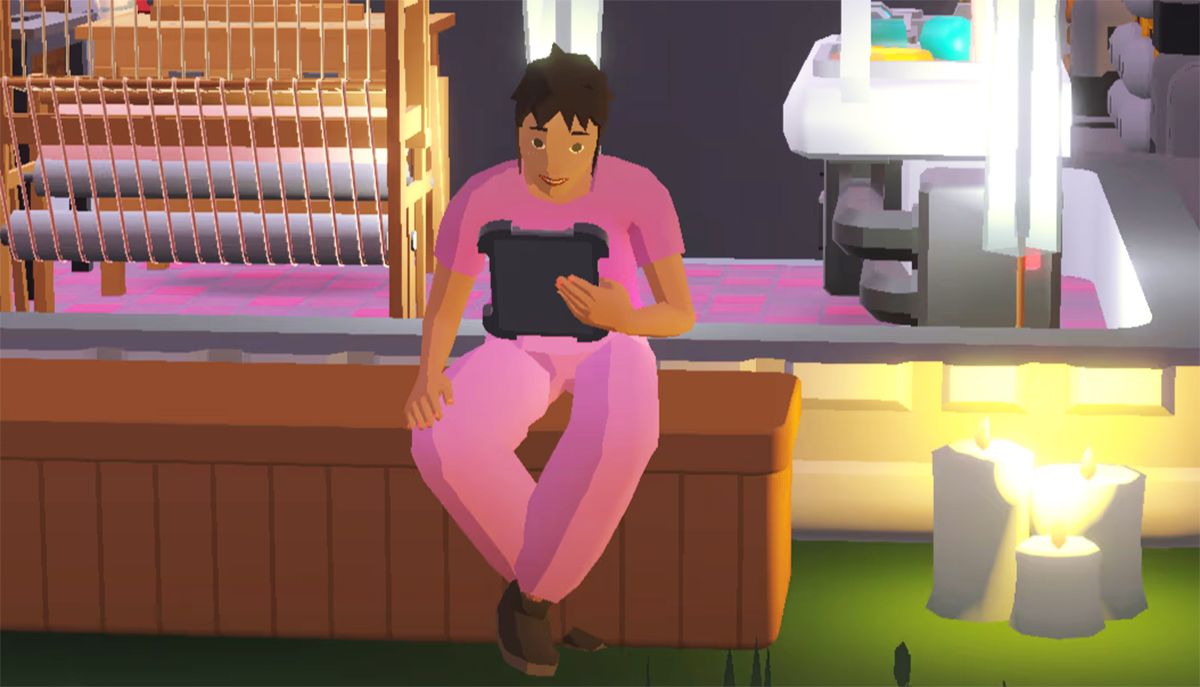
Klang Games' upcoming planet-sized MMO life simulation Seed relies heavily on generative AI to drive dialogue between players and their persistent avatars, but implementing the technology has proven significantly more challenging than expected.
Developed by the Berlin-based studio, Seed places players in control of autonomous characters called "Seedlings." These avatars continue acting, interacting, and living in the persistent online world even when players are offline. To facilitate communication, players can send direct text messages to their Seedlings, who then generate conversational replies using AI.
The Promise and Reality of Generative AI
Klang Games CEO Mundi Vondi initially viewed generative AI as a transformative solution for the ambitious project, which attempts to merge large-scale simulation with deep character interactions.
"I would often say Seed's going to be like Eve and the Sims combined, but it won't have the fidelity of the Sims… But then came our saving grace, which was generative AI. Because all of a sudden, we saw the possibility: wait a minute, we can go far deeper than any simulation game has ever gone, while still maintaining this huge scale," Vondi told GamesIndustry.biz. "As far as silver bullets go, I mean, that really was the one."
However, bringing that vision into practice revealed severe technical and design hurdles. Vondi acknowledged that the implementation was "much harder than we thought," pointing to specific edge cases that repeatedly broke dialogue logic and world state continuity.
"Like if I tell you it's my birthday today and then I tell you again tomorrow, you need a very different reaction, [because] one of those days I must have been lying… We started to see a thousand little breakages like that, and then we realised, wait a minute, this isn't going to be easy at all," Vondi explained.
Technical Challenges and Immersion Breakages
Managing persistent AI characters in an always-on world introduces complex nuances. Key issues faced by the studio include maintaining long-term conversational context, handling player interruptions, managing how Seedlings react to being treated rudely, and tracking what characters did while the player was away.
Additionally, the developers faced difficulties with AI "hallucinations"—instances where the conversational model suggests actions or events that are not supported by Seed's actual gameplay mechanics. Critics have noted these shortcomings, with PC Gamer reporting that poor chatbot dialogue in the game frequently breaks player immersion.
Studio Background and Launch Schedule
Klang Games was co-founded by Mundi Vondi alongside Oddur Snær Magnússon and Ívar Emilsson, two former developers from Eve Online creator CCP Games. Conceptualization for Seed began over a decade ago, with formal preproduction starting in 2018.
Seed was scheduled to enter early access in the summer of 2026, followed by a release on Steam later that year. The game operates on a premium model where players purchase the title upfront, with additional revenue generated through cosmetic items and extra Seedling character slots.
Editorial note: Generated with AI from the cited sources and published through IRLMSQ's automated news workflow. This article was not reviewed by a human before publication. Editorial standards
Comments
Sign in to join the discussion.
No comments yet. Be the first to join the discussion.
Related
Related Articles
MMO Jukebox Song of the Week: ‘Rotgut the Bloated’ from Dungeon Runners
Why it matters: MassivelyOP highlights 'Rotgut the Bloated' from NCsoft's defunct satirical MMOARPG Dungeon Runners, revisiting the game's soundtrack and history.

Elder Scrolls Online’s Microsoft-induced ‘capacity’ issues bring an end to the web version of its cash shop
Elder Scrolls Online
Why it matters: ZeniMax Online Studios has shut down the web version of the Elder Scrolls Online Crown Store as remaining staff manage reduced bandwidth following Xbox layoffs.
The Daily Grind: What anticipated MMO completely let you down the first time you logged into it?
Why it matters: MassivelyOP's latest 'The Daily Grind' column dives into the gap between years of pre-launch hype and the immediate reality of logging into an MMO for the first time.