Roguelite strategy spinoff Company of Heroes 3: Final Stand breathes fresh live into some of the series' oldest features
Relic Entertainment unveils Company of Heroes 3: Final Stand, a standalone roguelite wave-defense spin-off featuring 12-round matches, meta-progression, and structured AI.
- Author
- IRLMSQ Editorial Desk
- Published
- Jul 31, 2026
- Read time
- 2 min
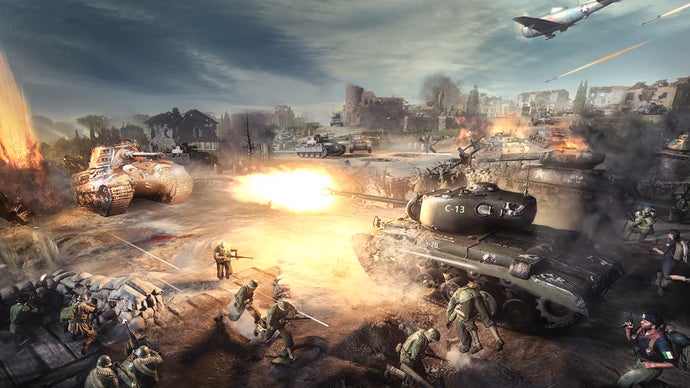
Relic Entertainment has detailed Company of Heroes 3: Final Stand, a standalone roguelite wave-defense spin-off designed as a shorter alternative to the main real-time strategy series.
Built for players looking for quicker play sessions, Final Stand shifts away from traditional campaign maps to a survival format. Players must defend their headquarters across 12 escalating rounds against enemy forces, with matches supporting both single-player and two-player cooperative play. The standalone title includes four playable factions: British Forces, US Forces, Wehrmacht, and the Deutsches Afrikakorps.
Survival Mechanics and Faction Progression
A run in Final Stand ends immediately if the player's headquarters is destroyed before surviving all 12 rounds. Between waves, players are presented with randomized choices of new units, passive upgrades, or active abilities to adapt their army on the fly.
During matches, players earn perk points that unlock permanent upgrades in faction-specific progression trees. These include passive stat boosts—such as increased health and faster training times—as well as structural changes to unit capabilities, including adding defensive features to outposts.
Game Director Eric Wrobel explained to Rock Paper Shotgun that the progression system helps bridge skill gaps across players. "We've noticed that our really top-level players were able to beat it with around 25% of the tree," Wrobel said. "But we have people that are at the top of the ladder working for us and playtesting, so that's sort of the cream of the crop. If you're not a really top-level player, you can unlock the whole [perk tree] and be able to tackle those high difficulties."
Structured AI and Dynamic Events
To balance challenge with strategic clarity, Relic designed the enemy AI to follow predictable patterns rather than directly counter-picking the player's unit choices every round.
"They're not specifically countering you," Lead Designer Ross Cockburn told Rock Paper Shotgun. "[The AI's] trying to pick trends and stick to certain unit types throughout a run. So in one run, it might decide at the start that it's going to prefer one unit type over another."
Cockburn noted that an earlier internal version changed enemy abilities every round, which left players without enough time to formulate a strategic counter. The system was modified so the AI retains selected abilities for several waves before switching. "We're not studying the player and deliberately trying to counter them with stuff like this," Cockburn added. "We're trying to make it the other way around, where the AI is being the one that's less predictable and it's the player's job is to counter that."
To disrupt established player setups, Final Stand incorporates unscripted dynamic events mid-match, including strafing runs, phosphorus airdrops, and waves of Goliath Demolition Vehicles. Wrobel noted that these random events balance out the AI's structured wave logic: "From wave to wave, there's actually more random craziness happening with these events. So you can have the same event happen like five times in a row."
Relic designed the mode to be modular, allowing developers to introduce new bosses, units, and technology trees in potential future updates.
Editorial note: Generated with AI from the cited sources and published through IRLMSQ's automated news workflow. This article was not reviewed by a human before publication. Editorial standards
Comments
Sign in to join the discussion.
No comments yet. Be the first to join the discussion.
Related
Related Articles
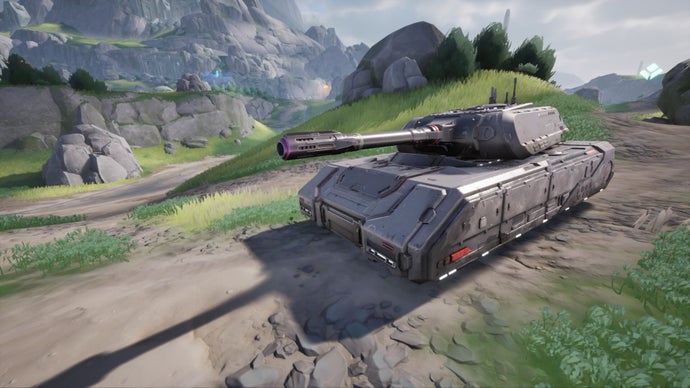
Stealth and armour placement rule supreme in Tyr, the new tank shooter from former Destiny and Valorant devs, with a public playtest now live
Destiny 2
Why it matters: Stoke Games has opened a public Steam playtest for Tyr, a tactical tank shooter emphasizing stealth, armor angling, and asymmetric vision.

Video: Street Fighter Live-Action Movie 'Blanka Vs. Ryu' Special Look Released
Why it matters: Paramount and Legendary released a special look at the upcoming live-action Street Fighter film, featuring Andrew Koji as Ryu, Jason Momoa as Blanka, and cameos from fighting game community legends.

Final Fantasy Devs Think Other Remakes Would Probably Go Beyond A Trilogy
Final Fantasy XIV
Why it matters: Square Enix leadership says remaking games like Final Fantasy VI, VIII, or IX could require four to five parts due to their sheer scale.